Research
Research Interests
- Global Political Economy
- Environmental Governance and Extractive Industries
- China–Latin America Relations
- Investment Screening and Institutional Design
- Quantitative and Mixed Methods in International Relations
Dissertation
My dissertation examines how the structural and instrumental power of Chinese firms shapes host-state capacity to enforce environmental regulation in Chile's extractive sector. Drawing on a mixed-methods design — quantitative analysis, process-tracing, and semi-structured interviews with Chilean decision-makers — I argue that regulatory outcomes are contingent on the degree of central government control over the investing firm and its embeddedness in local decision-making networks. A key finding is that institutional fragmentation is not necessarily a regulatory weakness: parallel architectures can act as redundant veto systems that contain the structural power of foreign capital more reliably than centralized ones.
Current Research
My current work examines how institutional architectures shape states' capacity to govern strategic asset acquisition by foreign investors in the lithium sector across multiple country contexts. This project contributes to debates on veto player theory, institutional layering, and the comparative politics of investment screening.
I am affiliated with the Millennium Nucleus on the Impacts of China in Latin America and the Caribbean (ICLAC), where I contribute to collaborative projects on Chinese investment patterns, green transitions, and socio-environmental governance in the region.
Research Positions
| 2023–Present | Researcher — ICLAC (Millennium Nucleus, ANID) |
| 2025–2026 | Researcher — Project from Universidad del Pacífico |
| 2020–2021 | Research Assistant — Universidad de Chile / National University of Singapore |
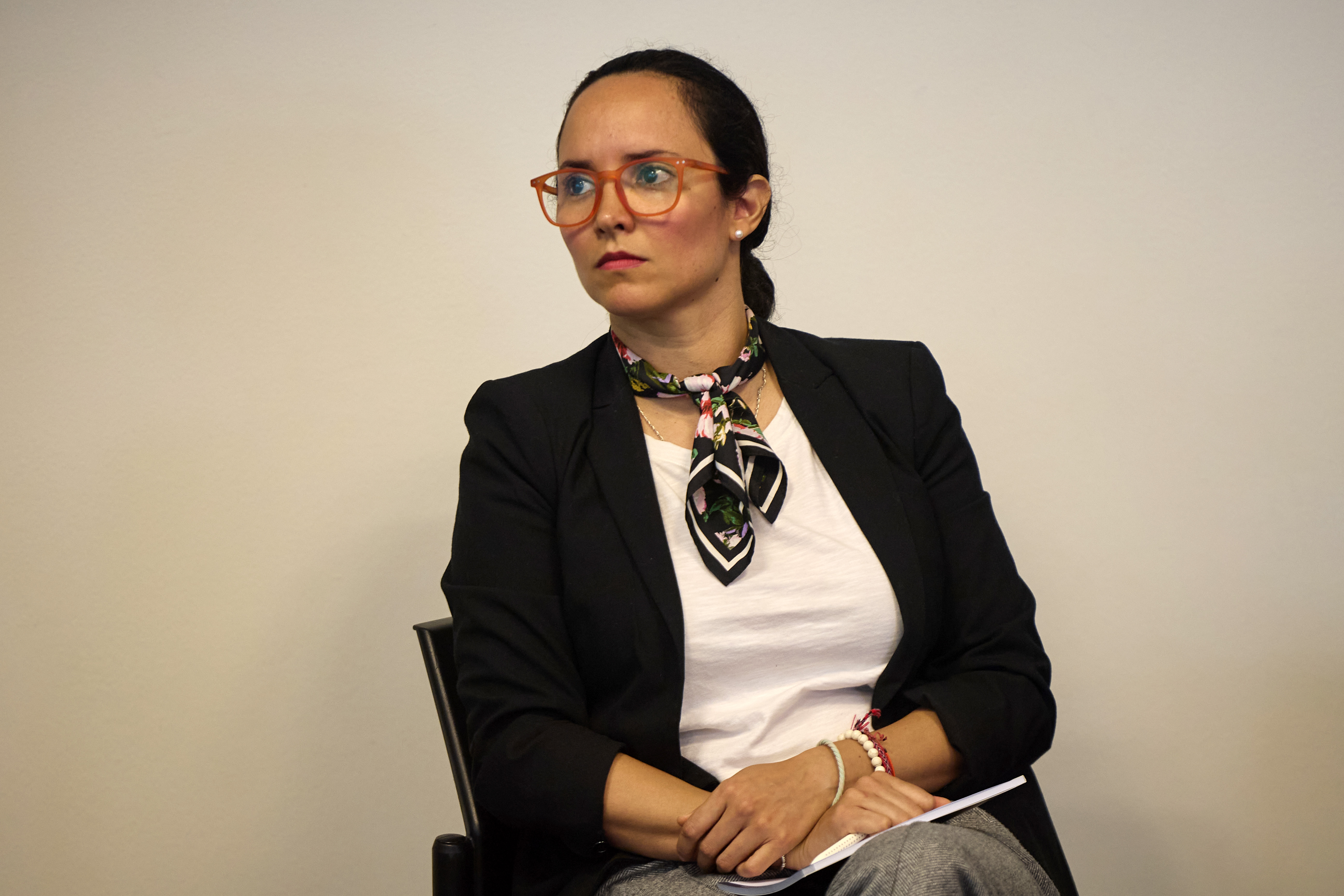
Lima, Peru. CECHAP / Boston University, 2025.
Selected Conference Presentations
- Dinámicas de Poder Estructural Estado-Empresas. El boom de las inversiones chinas y la implementación de la regulación ambiental en Chile. LASA Congress.
- Environmental compliance and governance in the context of Chinese investment: the case of Chile. Legal Dimension of China's Presence in Latin America, Universidad de Barcelona.
- Interaction between Chinese investments and environmental governance in the extractive industries of Argentina, Chile, and Peru. ACPS Annual Conference.
- The new geopolitics of clean and just energy transitions in China and the Global South. Dialogue Earth & Fundación Heinrich Böll.
- Sustainable Development in the Lithium Industry in Latin America. EKLA Regional Program.
- Chinese FDI and the environmental performance of South American countries. Congreso Mundial de Ciencia Política, IPSA.
- Capitalizing on the New Climate Economy in the Americas: Chinese investment and the energy transition in Latin America. Institute of Latin American Studies (ILAS), Chinese Academy of Social Sciences. Beijing, 2025.